The culture of Dying Matters: Exploring death across cultures in Plymouth

For many, death is a taboo subject, avoided and dodged until it happens to you. This week is Dying Matters Awareness week (5-11 May), an opportunity to open up conversations about death and dying and break down the taboos surrounding it.
The theme this year is ‘The Culture of Dying Matters’, focusing on how different communities and cultures in the UK feel, talk about, and deal with death and dying – and what brings them together. Our Digital Communications Specialist Gabby Nott has been exploring the idea of death across cultures in our local community.
Here in Plymouth our community is made up of a variety of religions and cultures, each with their own views and perspectives when it comes to death. As a hospice we work tirelessly to break down any barriers that people may face, so I was interested to hear more from different faith representatives on what dying is to them and what unites us all when facing death.

Arezoo Farahzad is the Chair of Trustees for Plymouth Centre for Faiths and Cultural Diversity. Arezoo is of the Baha’i faith, a religion that believes in the unity of religion and humanity across the world.
Arezoo tells me that it was the idea of death that first encouraged her to become a Baha’i.
“I was born into a family where both parents were practising the Baha’i faith. But there is a law in the Baha’i faith that says that children within Baha’i families and the Baha’i community have to grow up learning about all world religions. And then at 15, they get to choose.
“There’s no assumption that just because you’re born into a family that that’s the path that you choose. You’re encouraged to have an independent investigation for the truth. So when I was in my teens, I was really happy about pretty much everything that I’d learnt about other religions and also about the Baha’i faith. But my one question was, what’s death all about? And it was the one thing that really kind of scuppered me. What’s the point?
“We’re taught to live a life according to these spiritual teachings, but what’s the point if it all ends when we die? And then I started to study the Baha’i writings about the Journey of the Soul. And honestly, it was like a massive weight had been lifted off my shoulders because I thought if this is what it’s all about, then I feel comfortable with this.
“It’s been a journey of learning ever since. It doesn’t stop. But what I’ve learned and learnt even better after my father passed away, because when you actually lose a loved one, then the whole subject becomes even more profound.
“What I learnt is that we’re on a journey. And the soul, according to the Baha’i writings, the soul associates itself with the body at the time of conception. Then it’s an ongoing journey of growth, but the soul is free and it experiences things. It grows and develops through our experiences, our challenges, our good times, our more challenging times. Each of this is really helping the soul grow.
“And that was such a beautiful concept to me. Everything that we encounter in this life is helping our souls grow and prepare and develop for what it needs for the next part of the journey.”

Arezoo found this concept particularly comforting when her father grew ill and was being cared for by St Luke’s at home and at our specialist unit.
“In the Baha’i writings it says that whatever you experience in this part of the journey, you take it with you. So in terms of palliative care and bereavement, it’s really beautiful to know that your loved ones that move on don’t lose their bonds and their memories that you made together in this life. That was incredibly comforting to me when I lost my dad because I kind of felt that I hadn’t lost him. That he’s still very much here with me.”
It was the peak of Covid when Arezoo’s father was being cared for, adding extra trauma to the family at what was already a difficult time.
“St Luke’s were fantastic during such an awful time. They allowed Mum and I to be with Dad and we would just sleep in his room during those final days of his life. But about three days before he passed away, the reality of what was happening actually hit me. And for one second, I suddenly realised that he was going. I though I’m not ready to let him go and I’m not ready to say goodbye.”
As a way of calming herself down Arezoo reached for her prayer book which she kept by her father’s bed and opened it at a random page to read a prayer and calm herself down.
“It fell open on a page with a hidden word from Baha’u’llah, it said, ‘I’ve made death a messenger of joy to thee, wherefore dost thou grieve?’ It was such a direct and immediate pull yourself together. He’s going to be with me and Mum every second of every day, whenever we want him to be. Yes, he’s going to be on his own journey, but he’s going to be with us and he’s going to be with us in a very powerful way.
“I don’t think in any world religion have I seen death being described as a messenger of joy. And that is incredibly comforting for me. When we lose someone who we love, whoever that may be, friends, family, there is an element of joy attached to it because you think, wow, what a beautiful journey you’ve just begun. Please continue to shower our lives with energy because we know that you’ve not lost that connection and that all the bonds remain.
“Baha’i’s don’t see suffering as punishment or torture. They actually see it as a means of growth. And if there’s one thing that is for certain, is that at some point in our lives, this physical part of our lives is going to come to an end. But where the Baha’i faith is concerned, an end is just the beginning of another part of a journey. It’s not an end. It’s seen as a joyous thing.”
Here at St Luke’s we encourage open conversations about death, not just this week but all the time. By talking, listening and discussing death we can prepare for the future and have the best possible end to life. According to Arezoo and the teachings of Baha’i, talking about death is similar to how we talk about going anywhere, whether on a journey or trip of a lifetime.
“Talking about death is as important as talking about going on a journey. This aspiration of, I’ve always wanted to go to such a place and experience this. If we learn to make death less of a taboo, and to refer to it throughout our lifetimes as a journey that we aspire to, what kind of things we’d like to take with us in preparation for that journey and the kind of virtues that we need to develop to help, then it would really transform the world.”
Regardless of faith and culture, grief is a feeling that can unite us all, so I was interested to hear how the Baha’i deal with bereavement. Arezoo tells me that prayer is key when looking at death and dying.
“In the Baha’i writings we’re encouraged to pray for those who have moved on in the same way that they pray for us. I think that is a beautiful relationship. It’s again where I can relate it to my father, but I pray for my father every day for the joyous progress of his journey. But at the same time, he’s also re-energising and praying in turn for me.
“So things that I encounter in my life or the way that I’m protected from things in this part of my journey are probably a result of his prayer and the prayer of those who have moved on who have some form of love for me. It’s a temporary separation because everyone reconnects. This is a path we all have to walk.”
Matt Cole is an Education Programme Coordinator at the Kadampa Meditation Centre in Plymouth, he belongs to the New Kadampa Tradition of Buddhism.
He describes to me how contemplating and meditating on death, the fragility of life and ‘the rare and precious nature of our human life’ is a key teaching and practice in Buddhism.
“It motivates us to live life meaningfully and not to waste this opportunity to follow spiritual paths to enlightenment,” he says. “Also it helps us understand the impermanence of life, that we can die at any time for an endless list of reasons, and ultimately means when we are dying we are prepared, accepting and unafraid of death.
“People find this somewhat disturbing at first, however, engaging with it through contemplation and meditation brings acceptance and a peace of mind; it can actually be quite joyful and Buddhists tend not to be at all abashed about talking about death with each other.”

According to the New Kadampa Tradition, when we die we experience a rebirth back into what is called samsara, the cycle of rebirth and the waking world.
Matt adds: “Depending on our karma, we will be born into one of six samsaric realms, of which the human realm is one and the most advantageous. Its advantageous because being reborn as a human gives us the best opportunity to train our mind to attain enlightenment – when we will become a Buddha, which literally means ‘awakened one’ – awake from the sleep of our mind which keeps us in samsara.
“When we physically die, our very subtle mind leaves the body through the crown of our head and this is why it is common for the body not to be disturbed for a period after physical death. Prayers can be made to assist the dying and recently deceased and mantras said. Ideally, people will be able to die peacefully and very accomplished practitioners and teachers will know they are dying and may go into a special meditative practice in order to die – their physical body will die and their mind will be in a special state of preparedness.”
Like in the Baha’i faith, Matt describes how Buddhist teachings can often be used to help in dealing with and overcoming grief.
“The whole purpose of training the mind through Buddha’s teaching and training in meditation is to see the true nature of life, its ups and downs, the suffering and joys, for what they are so we do not become distressed when things go wrong and do not become over excited or attached to things when they go our way. It enables us to maintain (if not strive to maintain) a peaceful mind when we lose someone.
“Some practitioners will be very accomplished and experienced and able to experience the death of a loved one with a peaceful mind, whereas others will not – it’s still a varied experience for people but we can use our wisdom and compassion to overcome and deal with our grief in a positive way.”
Jerry Sibley has been the custodian for Plymouth Synagogue for the past 18 years. As well as looking after the community and the building itself, he is often teaching school children and local community groups.
Jerry describes that as an Orthodox Jew, death is discussed openly and is celebrated. “Death is part of the life cycle,” he says.
“With every youngster that’s brought up, they are always informed that there will be an end date. But also in amongst this, when the time is getting close, the family all come together and get a lot closer and look after each other, so in that sense it brings the family together.”
When it comes to the death itself, there is usually an immediacy with the burial Jerry tells me, with funerals usually taking place as soon after death as possible, usually within 24 hours.
“Each Rabbi is different to how they perceive things. But certainly within the Orthodox community, the undertaker will be informed that there is a death imminent. The Rabbi will come in and see the person that’s passing away, and they will do prayers and blessings before the end. Then when the actual time comes, they are meant to be buried before sunset on the following day and the family will all come down for that, supporting the bereaved.”

“The funeral service is actually held at the grave site, not at the Synagogue as rather than a place of worship, it is a meeting place and a place of learning. You’ll have a very similar kind of thing like a Christian funeral service at the beginning, where relatives and friends will all gather together before the family comes in behind the coffin. And at that point, the friends and family, all have the opportunity of saying something before the funeral service actually takes place, it’s very personal and intimate. From there, the coffin gets taken down to the grave site. On the way down, they pause seven times, and there will be songs sung, then at the grave site, there will be a funeral service, all in Hebrew.
“Once the coffin has gone into the grave family members and friends pick up a shovel and while paying their respects, place soil on top of the coffin. That will continue until the coffin is completely covered.
“The family will then have a whole week’s worth of mourning. After that, they recite what is called the Kaddish. It’s a memorial prayer which is done every single day for a whole year. Normally it’s done by the eldest son or in the absence of an eldest son, somebody else will be allocated to do it. During those 12 months, family and friends will come round and take care of the person who is grieving.
“At the end of the year, everybody then goes back to the cemetery and then there will be a service there with a headstone in place. After that, if you are a widow, you are meant to take off your hat and your veil and all your black clothes and rejoin society. Because in Judaism, life is for living, not for mourning. You are not expected to mourn for the rest of your life in grief. You have that period, that year, and then you move on. It’s not that you don’t remember, you do. Every single year on the anniversary of the death, there’ll be a memorial candle lighting service, which is done at home.”
While every religion and faith has its own cultural experiences of death that set them apart, there are many shared aspects of dying, grief and bereavement that unite us all. What is clear is that memories are so vital in the aftermath of death, whatever faith we believe in and live by, we use our memories of our loved ones to celebrate their lives, something we strongly uphold and encourage here at St Luke’s. In a city like Plymouth our spectrum of faiths may not be as diverse as other major cities in the UK, but as a local hospice, we welcome people of all beliefs into our comforting arms. Our care is open to all.
 https://www.stlukes-hospice.org.uk/wp-content/uploads/2026/08/Daves-Story-Blog-Header.jpg
733
1030
Charlie Carlyle
https://www.stlukes-hospice.org.uk/wp-content/uploads/2022/12/st-lukes-hospice-plymouth.svg
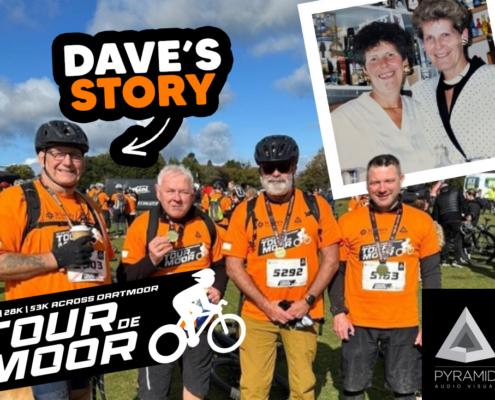
Charlie Carlyle2026-10-21 10:49:262026-10-21 10:49:26River rides Tour de Moor in memory of his grandad
https://www.stlukes-hospice.org.uk/wp-content/uploads/2026/08/Daves-Story-Blog-Header.jpg
733
1030
Charlie Carlyle
https://www.stlukes-hospice.org.uk/wp-content/uploads/2022/12/st-lukes-hospice-plymouth.svg
Charlie Carlyle2026-10-21 10:49:262026-10-21 10:49:26River rides Tour de Moor in memory of his grandad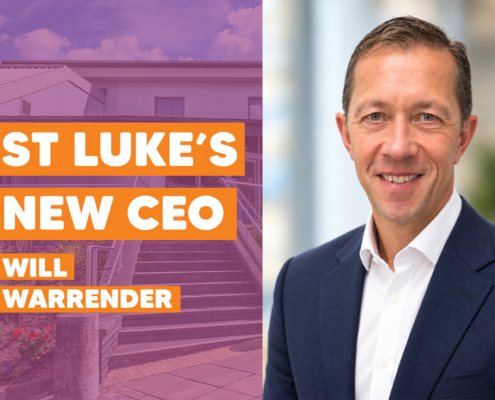 https://www.stlukes-hospice.org.uk/wp-content/uploads/2026/10/Will-Warrender-Annoucement-New-CEO-Blog-Header.jpg
733
1030
Charlie Carlyle
https://www.stlukes-hospice.org.uk/wp-content/uploads/2022/12/st-lukes-hospice-plymouth.svg
Charlie Carlyle2026-10-19 13:26:182026-10-19 13:26:37St Luke’s appoints new Chief Executive
https://www.stlukes-hospice.org.uk/wp-content/uploads/2026/10/Will-Warrender-Annoucement-New-CEO-Blog-Header.jpg
733
1030
Charlie Carlyle
https://www.stlukes-hospice.org.uk/wp-content/uploads/2022/12/st-lukes-hospice-plymouth.svg
Charlie Carlyle2026-10-19 13:26:182026-10-19 13:26:37St Luke’s appoints new Chief Executive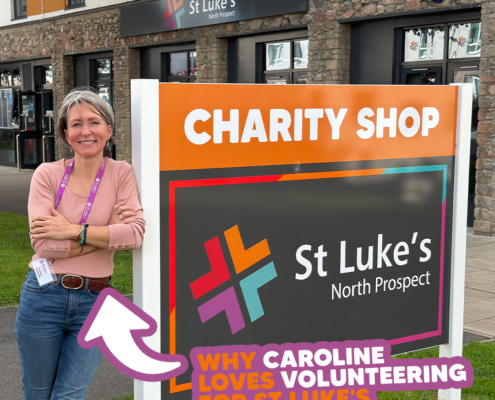 https://www.stlukes-hospice.org.uk/wp-content/uploads/2026/10/Volunteer-Caroline-October-2026-1080.jpg
1080
1080
Charlie Carlyle
https://www.stlukes-hospice.org.uk/wp-content/uploads/2022/12/st-lukes-hospice-plymouth.svg
Charlie Carlyle2026-10-18 08:00:552026-10-15 13:28:35Connection, community and giving back: Why Caroline loves volunteering for St Luke’s
https://www.stlukes-hospice.org.uk/wp-content/uploads/2026/10/Volunteer-Caroline-October-2026-1080.jpg
1080
1080
Charlie Carlyle
https://www.stlukes-hospice.org.uk/wp-content/uploads/2022/12/st-lukes-hospice-plymouth.svg
Charlie Carlyle2026-10-18 08:00:552026-10-15 13:28:35Connection, community and giving back: Why Caroline loves volunteering for St Luke’s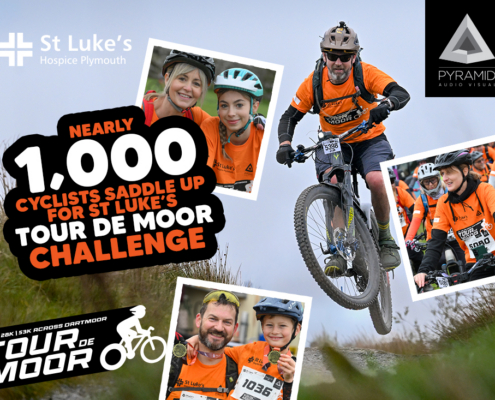 https://www.stlukes-hospice.org.uk/wp-content/uploads/2026/10/TDM26-Post-Event-Blog-Header.jpg
733
1030
Charlie Carlyle
https://www.stlukes-hospice.org.uk/wp-content/uploads/2022/12/st-lukes-hospice-plymouth.svg
Charlie Carlyle2026-10-12 19:57:192026-10-12 20:17:48Nearly 1,000 cyclists saddle up for St Luke’s Tour de Moor challenge
https://www.stlukes-hospice.org.uk/wp-content/uploads/2026/10/TDM26-Post-Event-Blog-Header.jpg
733
1030
Charlie Carlyle
https://www.stlukes-hospice.org.uk/wp-content/uploads/2022/12/st-lukes-hospice-plymouth.svg
Charlie Carlyle2026-10-12 19:57:192026-10-12 20:17:48Nearly 1,000 cyclists saddle up for St Luke’s Tour de Moor challenge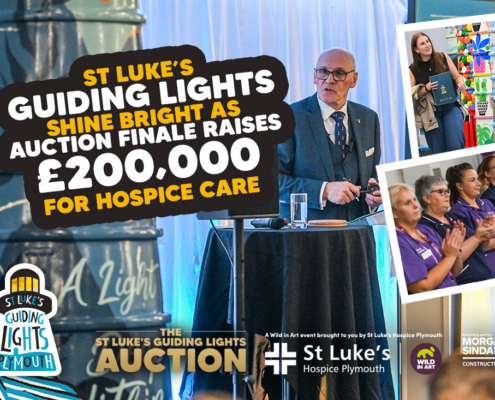 https://www.stlukes-hospice.org.uk/wp-content/uploads/2026/10/Post-Auction-Blog-Header.jpg
733
1030
Charlie Carlyle
https://www.stlukes-hospice.org.uk/wp-content/uploads/2022/12/st-lukes-hospice-plymouth.svg
Charlie Carlyle2026-10-05 13:52:312026-10-05 13:52:31Our Guiding Lights shine bright as auction finale raises £200,000 for hospice care
https://www.stlukes-hospice.org.uk/wp-content/uploads/2026/08/Daves-Story-Blog-Header.jpg
733
1030
Charlie Carlyle
https://www.stlukes-hospice.org.uk/wp-content/uploads/2022/12/st-lukes-hospice-plymouth.svg
Charlie Carlyle2026-09-02 11:32:112026-09-02 11:48:26Dave’s reason to ride: Making every mile matter
https://www.stlukes-hospice.org.uk/wp-content/uploads/2026/10/Post-Auction-Blog-Header.jpg
733
1030
Charlie Carlyle
https://www.stlukes-hospice.org.uk/wp-content/uploads/2022/12/st-lukes-hospice-plymouth.svg
Charlie Carlyle2026-10-05 13:52:312026-10-05 13:52:31Our Guiding Lights shine bright as auction finale raises £200,000 for hospice care
https://www.stlukes-hospice.org.uk/wp-content/uploads/2026/08/Daves-Story-Blog-Header.jpg
733
1030
Charlie Carlyle
https://www.stlukes-hospice.org.uk/wp-content/uploads/2022/12/st-lukes-hospice-plymouth.svg
Charlie Carlyle2026-09-02 11:32:112026-09-02 11:48:26Dave’s reason to ride: Making every mile matter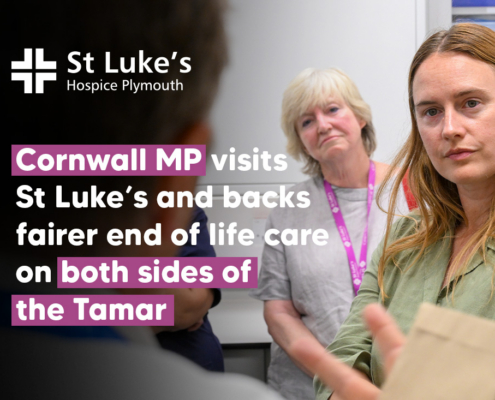 https://www.stlukes-hospice.org.uk/wp-content/uploads/2026/08/MP-Visit-Blog-Header.jpg
733
1030
Jesse Cambridge
https://www.stlukes-hospice.org.uk/wp-content/uploads/2022/12/st-lukes-hospice-plymouth.svg
Jesse Cambridge2026-09-02 10:00:312026-09-02 15:41:55Anna Gelderd MP backs fairer end-of-life care
https://www.stlukes-hospice.org.uk/wp-content/uploads/2026/08/MP-Visit-Blog-Header.jpg
733
1030
Jesse Cambridge
https://www.stlukes-hospice.org.uk/wp-content/uploads/2022/12/st-lukes-hospice-plymouth.svg
Jesse Cambridge2026-09-02 10:00:312026-09-02 15:41:55Anna Gelderd MP backs fairer end-of-life care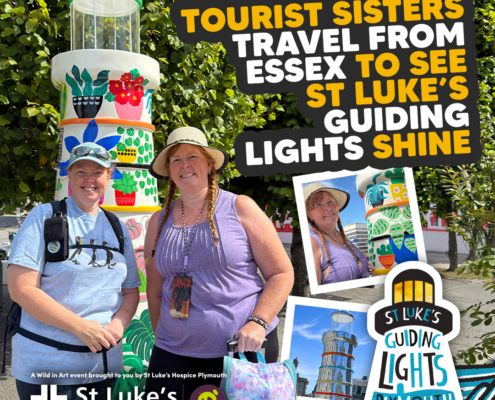 https://www.stlukes-hospice.org.uk/wp-content/uploads/2026/08/Guiding-Lights-Tourist-Article-August-2026-108057.jpg
1080
1080
Charlie Carlyle
https://www.stlukes-hospice.org.uk/wp-content/uploads/2022/12/st-lukes-hospice-plymouth.svg
Charlie Carlyle2026-08-28 09:00:582026-08-26 20:37:30Tourist sisters travel from Essex to see Guiding Lights shine
https://www.stlukes-hospice.org.uk/wp-content/uploads/2026/08/Guiding-Lights-Tourist-Article-August-2026-108057.jpg
1080
1080
Charlie Carlyle
https://www.stlukes-hospice.org.uk/wp-content/uploads/2022/12/st-lukes-hospice-plymouth.svg
Charlie Carlyle2026-08-28 09:00:582026-08-26 20:37:30Tourist sisters travel from Essex to see Guiding Lights shine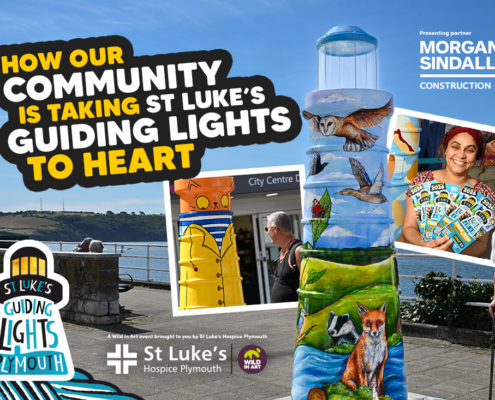 https://www.stlukes-hospice.org.uk/wp-content/uploads/2026/08/GL-One-Month-On-Blog-Header-August-2026.jpg
733
1030
Charlie Carlyle
https://www.stlukes-hospice.org.uk/wp-content/uploads/2022/12/st-lukes-hospice-plymouth.svg
Charlie Carlyle2026-08-24 17:06:302026-09-02 15:37:47How our community is taking St Luke’s Guiding Lights to heart
https://www.stlukes-hospice.org.uk/wp-content/uploads/2026/08/GL-One-Month-On-Blog-Header-August-2026.jpg
733
1030
Charlie Carlyle
https://www.stlukes-hospice.org.uk/wp-content/uploads/2022/12/st-lukes-hospice-plymouth.svg
Charlie Carlyle2026-08-24 17:06:302026-09-02 15:37:47How our community is taking St Luke’s Guiding Lights to heart


 Lacing up for St Luke’s