Top takeaways from inspiring Hospice UK Conference

They say there’s strength, as well as safety, in numbers, especially when you’re in the company of people who share the same aspirations and goals.
That must explain the overwhelming sense of empowerment, togetherness and possibility at the recent Hospice UK conference, where hundreds of us gathered with the common aim of making sure excellent palliative and end of life care is available for everyone who could benefit from it, wherever they live in the UK and whatever their circumstances.
In our little bubble here in the South West, we don’t often get a chance to explore too far beyond our own doorstep. Stepping out of the day-to-day to focus on the bigger picture of hospice care in the UK keeps us tuned in to mutual challenges, such as current financial pressures, and lets us be inspired by some of the amazing innovative work being done by other hospice teams, health and care partners and academic researchers.
With that in mind, it was both educational and energising to be part of the St Luke’s team attending this year’s conference in Glasgow along with Tricia Davis, our Director of Clinical Services, Nurse Consultant Jen Nicholls, who heads up our community team, NHS manager Jemma Edge, one of our Trustees, and Robert Maltby, our Head of Communications and Marketing.

Our visit to Scotland coincided with a momentous week in which MPs in Westminster voted in favour of moving forward with a Bill to legalise assisted dying in England and Wales. Unsurprisingly this emotive topic – one that dramatically divides opinions, in contrast to almost everything else on the agenda – was a major focus of the conference.
As English Labour MP Kim Leadbetter’s Terminally Ill Adults (End of Life) Bill was about to be approved to go to Committee Stage in Westminster, Scottish MP Liam McArthur was on stage in Glasgow speaking frankly about his proposed Assisted Dying for Terminally Ill Adults (Scotland) Bill and facing a barrage of questions about its practicalities and potential implications for palliative care and hospices. Some people said the Bill should go to a public referendum and, in a later session, a panel of faith leaders all expressed their opposition to assisted dying on religious grounds.

In his opening speech, Hospice UK chief executive Toby Porter stressed that while the umbrella organisation’s stance remains, like St Luke’s, neither for or against assisted dying, there were fears on both sides of the argument and it was by no means a “winner takes all” situation.
Toby swiftly moved on to highlight that pressures on hospice funding were hitting hard at a time when we should be expanding services to cope with rising demand and a major shift from hospital to community care, bearing in mind a predicted 20 per cent rise in deaths expected nationally by 2040 – a sobering thought.
Officially declaring the conference open, HRH The Princess Royal observed that “quite astonishing” medical advances mean there are so many more people that the hospice movement can now support. She spoke of the importance of collaboration and partnerships, which was another major theme of the three-day event.

A special example of this was on show in the central hall where all the delegates gathered for refreshments and networking. Taking pride of place as part of the conference exhibition was a poster submitted by Judy Horne and Anne Dixon of St Luke’s Community Development team. It charted how they shared their Compassionate Communities awareness session training resources with two other UK hospices, and it was great to meet Jenny England from St Catherine’s Hospice, Preston and Hugh McElhinney of St Elizabeth’s Hospice, Ipswich, who were on hand to chat with people about their work with St Luke’s and its scope for gifting to other hospices far and wide.
Collectively and independently, Tricia, Jen, Jemma, Robert and I took time to immerse ourselves in and reflect on a range of interesting and important presentations and discussions, coming away with observations and learnings that will no doubt inform our different roles as we move forward.

After a major session with a panel of clinical leads, representing England, Scotland, Wales, Northern Ireland and Republic of Ireland, considering the evolving role of hospices in addressing increasing complexities of need at the end of life and how to create more sustainable models of care through well-integrated systems, Tricia confirmed that we are on the right, forward-thinking track in terms of our new strategy, and how we are putting it into action.
This also applied to a session looking specifically at the progress of a Hospice UK programme to develop and deliver models of end of life care for people identified with frailty – people with comorbidities that result in a succession of crises and deterioration in health – rather than a specified terminal illness. Apparently 10 per cent of people aged 65 or over have some degree of frailty, while half of those are aged 85 and over.
Tricia said: “The clinical services update was really reassuring. There was a focus on keeping end of life patients out of emergency departments (ED), particularly those with frailty. We are doing the right thing in identifying patients with frailty in the last year of life and including them in our work to coordinate services and provide rapid response for those who need it.
“We’re already working on how we can get to the people who need us much earlier in their journeys. Patients can be on active treatment and still benefit from end of life care, so we are linking with some outpatient clinics to increase awareness of our services and how people can access them.
“Anyone who has had any level of illness for some time will benefit from access to complementary therapies and classes, like our Pilates sessions, and we can also pick them up through our links with the community, including Compassionate Cafes. It’s all about joining the dots.
“We’re going to be appointing a Band 7 frailty CNS who will manage a frail, but stable, end of life caseload, and a nurse consultant who can link directly with South Western Ambulance Service to avoid people being unnecessarily admitted to ED.”
Tricia stressed that once someone is identified as being in the last six to 12 months of their life there has to be something to offer them, which is why St Luke’s is poised to provide a local one-stop coordination hub.
“If we are going to be the central contact for anyone in their last year of life, we have to have the links and the capacity to respond, and it was interesting to gather information on some of the different ways we can do that. Because we have a team delivering social care, we are not only there for clinical and practical care. We are also able to help people to access benefits and to prepare for grief and loss.”

The session on the cost of dying and financial hardship, all about the impact of poverty and fuel poverty when you’re at the end of life, delivered some uncomfortable truths for Robert.
He said: “I was shocked to hear not only that 110,000 people die in poverty in the UK each year, but that 30 per cent of those are of working age and often face huge financial problems after a terminal diagnosis. Expert help at the right time can mean the difference between getting the state benefits you’re entitled to, helping with food and energy bills, within a matter of weeks rather than dying before you receive anything.
“There was a lot of discussion about the campaign to get the government to guarantee at least a State Pension level of income for everyone who receives a terminal diagnosis. Otherwise people can be struggling for months on £80-100 per week before they are properly assessed, unable to heat their homes, eat properly or pay for transport to hospital appointments.
“I hadn’t realised how relevant this is for some of the patients we look after, but talking to Tricia and Jen afterwards I discovered that our Patient and Family Support Service team are dealing with cases like this every day.
“Giving advice on financial matters like this is such an important part of the package of care we provide for our patients. Perhaps we need to be talking about this kind of hardship a lot more, both internally and externally and in a sensitive way, to increase awareness and make sure that those affected don’t feel alone or ashamed?”

Learning about the new model of state funding for hospices in Ireland was another session that gave Robert plenty of food for thought.
“The funding hospices in England receive from the government is a very hot topic, so it was interesting to hear how the Republic of Ireland has prioritised palliative and end of life services, so hospices there are now 90 per cent state-funded. A phrase used by one of the speakers struck a strong chord: ‘Palliative care is not the cherry on the cake. It is the cake’.
“All palliative and end of life care and medication costs are covered. It’s only the 10 per cent relating to buildings and capital projects that is paid for by local fundraising initiatives. To put that in perspective, St Luke’s receives just 24 per cent of our annual costs for services commissioned by the NHS. For some UK hospices the percentage is as high as 38 and for others as low as 18.
“Better government financial support is undoubtedly welcome, but I wonder whether that high level of state funding might take away the autonomy and agility we currently enjoy as hospices. It also needs to be seen in the context of Ireland’s system of state health provision where the majority of adults under 70 are charged fees for basic services, like GP or ED visits and hospital stays.”

As a journalist I find all aspects of hospice care fascinating, but it’s the personal stories that really speak to me. Hearing Patient Voices (to inform practice improvement and service design) was a hard-hitting but heartwarming session that brought home the overarching importance of listening, quoting “No decision about me, without me”.
Lesley Goodburn spoke movingly about her husband Seth, and how she could not get his voice heard. He died in hospital 33 days after being diagnosed with pancreatic cancer. Afterwards Lesley (now Head of Public Involvement for the National Institute for Health and Care Excellence) wrote 11 impassioned letters to people involved in his care during that time, spelling out what an awful experience it was for her and Seth, and copied them to health commissioners. Those letters have informed a play called Homeward Bound: Seth’s Story which can be seen on the Hospice UK website. It’s basically a personal call for health professionals to reflect on the importance of compassionate person- and family-centred care at the end of life, with educational resources as a valuable extra.
PIC: Screenshot of Lesley Goodburn from Homeward Bound video?
Young people who fall into the gap between child and adult hospice services were highlighted by consultant Gemma Allen, who pointed out that just because someone is aged 16-25, it doesn’t necessarily mean they need an app or computer game to identify and communicate their feelings, either about their own terminal illness or their grief when someone close dies. Human interaction and delivering age appropriate information in different forms is key.

Another very striking personal story came from Anna Sutherland, a palliative care consultant from Strathcarron Hospice, as part of a session called Rethinking Rural: improving care and support for people in remote, rural and island communities.
Anna painted a vivid picture of her grandmother’s death and funeral at home on Tiree, an Inner Hebridean island that can only be reached via two long ferry crossings, where palliative care and death are – by tradition and necessity – everybody’s business. She contrasted this with a sorry tale of her terminally ill farmer relative who had spent six months in a windowless hospital side room on the mainland. Finally, when it was almost too late, he was airlifted back to the island to die in his own home a few days later, with his cattle coming to visit him at the croft window.

We may not be quite that remote here on our patch of Devon and Cornwall, but our nurses and urgent care teams are frequently visiting patients down far-flung muddy lanes on dark evenings and in all weathers.
The rural focus certainly gave Jen some food for thought around the care we provide in more remote communities and making that a priority, while ensuring our teams are safe and well prepared out on the road.
Jen said: “That session was very relevant for our community services at St Luke’s, and I took some good ideas from it. It’s made me think about how we can be more savvy about how to best organise our services to make sure we are treating everyone equitably.”

Overall, she was delighted to be at the conference, saying it was a great experience, which allowed her to stop and reflect on all the positive work we are doing at St Luke’s.
“It was really nice seeing the other work the hospices are doing and very reassuring we are leading the way on a lot of our services. I really enjoyed seeing and hearing the session on Assisted Dying and how complex this is when you think about all the different aspects of the Bill.
“And there was plenty to think about from the session on Faith Perspectives on Palliative, End of Life Care and Hospices, with some good practice ideas emerging from the Q&A with chaplains and speakers from the Muslim, Jewish, Christian and Sikh faiths who are connected with hospice care.”

As a member of our Board of Trustees, as well as a highly respected senior manager in the NHS, Jemma was pleased to immerse herself in the UK’s most comprehensive hospice care arena and soak up as much learning as possible.
Jemma said: “It was a great pleasure to represent St Luke’s as a Trustee and spend time with the team. My two days in Glasgow enabled me to get to know key team members, their roles, and the huge contribution they make to St Luke’s in terms of their skills, abilities, and dedication. The conference, whilst insightful and a great opportunity to learn, also gave great assurance surrounding the brilliant organisation that we run.
“The conference enabled us to learn and reflect upon the new assisted dying Bill and how we will need to support our teams as this develops. We learnt lots about opportunities to raise income to support St Luke’s, including ideas for innovation, and the importance of patient and family feedback to improve our services. Most importantly, it enabled me to reflect upon culture and leadership and what a talented organisation of individuals St Luke’s, which I am lucky to be part of.”

The time we all spent amongst our hospice movement peers confirmed that we should feel proud and confident that we’re already doing a grand job here at St Luke’s. And we’re not afraid to keep developing and changing if it means we can offer a better service to an increasing number of people in their last year of life, keeping them out of hospital when they don’t need to be there and delivering our compassionate care and understanding wherever patients and their families feel most comfortable.
Tricia has already registered our interest in bringing a team to the 2025 Hospice UK conference which is being held in Liverpool next November.
 https://www.stlukes-hospice.org.uk/wp-content/uploads/2025/12/Blog-Header-3-12-25.jpg
773
1030
Gabby Nott
https://www.stlukes-hospice.org.uk/wp-content/uploads/2022/12/st-lukes-hospice-plymouth.svg
Gabby Nott2025-12-04 16:29:072025-12-04 16:29:07BLOG: Decking the Halls at Turnchapel
https://www.stlukes-hospice.org.uk/wp-content/uploads/2025/12/Blog-Header-3-12-25.jpg
773
1030
Gabby Nott
https://www.stlukes-hospice.org.uk/wp-content/uploads/2022/12/st-lukes-hospice-plymouth.svg
Gabby Nott2025-12-04 16:29:072025-12-04 16:29:07BLOG: Decking the Halls at Turnchapel https://www.stlukes-hospice.org.uk/wp-content/uploads/2024/12/Coping-at-Christmas-Blog-2-5-12-24.jpg
773
1030
Gabby Nott
https://www.stlukes-hospice.org.uk/wp-content/uploads/2022/12/st-lukes-hospice-plymouth.svg
Gabby Nott2025-12-03 08:00:452025-12-04 22:02:49BLOG: Coping at Christmas
https://www.stlukes-hospice.org.uk/wp-content/uploads/2024/12/Coping-at-Christmas-Blog-2-5-12-24.jpg
773
1030
Gabby Nott
https://www.stlukes-hospice.org.uk/wp-content/uploads/2022/12/st-lukes-hospice-plymouth.svg
Gabby Nott2025-12-03 08:00:452025-12-04 22:02:49BLOG: Coping at Christmas https://www.stlukes-hospice.org.uk/wp-content/uploads/2025/11/Mens-Day-Out-2026-Blog-Header.jpg
773
1030
Gabby Nott
https://www.stlukes-hospice.org.uk/wp-content/uploads/2022/12/st-lukes-hospice-plymouth.svg
Gabby Nott2025-12-01 09:00:592025-11-27 14:07:55BLOG: St Luke’s Men’s Day Out is back for 2026!
https://www.stlukes-hospice.org.uk/wp-content/uploads/2025/11/Mens-Day-Out-2026-Blog-Header.jpg
773
1030
Gabby Nott
https://www.stlukes-hospice.org.uk/wp-content/uploads/2022/12/st-lukes-hospice-plymouth.svg
Gabby Nott2025-12-01 09:00:592025-11-27 14:07:55BLOG: St Luke’s Men’s Day Out is back for 2026! https://www.stlukes-hospice.org.uk/wp-content/uploads/2025/11/Light-up-a-Life-2025-Blog-Header.jpg
773
1030
Gabby Nott
https://www.stlukes-hospice.org.uk/wp-content/uploads/2022/12/st-lukes-hospice-plymouth.svg
Gabby Nott2025-11-27 14:41:332025-11-30 20:00:53BLOG: Light Up a Life 2025
https://www.stlukes-hospice.org.uk/wp-content/uploads/2025/11/Light-up-a-Life-2025-Blog-Header.jpg
773
1030
Gabby Nott
https://www.stlukes-hospice.org.uk/wp-content/uploads/2022/12/st-lukes-hospice-plymouth.svg
Gabby Nott2025-11-27 14:41:332025-11-30 20:00:53BLOG: Light Up a Life 2025 https://www.stlukes-hospice.org.uk/wp-content/uploads/2025/11/Charles-Cross-Opening-Social-Blog-Header.jpg
773
1030
Gabby Nott
https://www.stlukes-hospice.org.uk/wp-content/uploads/2022/12/st-lukes-hospice-plymouth.svg
Gabby Nott2025-11-24 14:35:162025-11-24 14:35:16BLOG: St Luke’s opens Plymouth’s largest charity shop at Charles Cross
https://www.stlukes-hospice.org.uk/wp-content/uploads/2025/11/Charles-Cross-Opening-Social-Blog-Header.jpg
773
1030
Gabby Nott
https://www.stlukes-hospice.org.uk/wp-content/uploads/2022/12/st-lukes-hospice-plymouth.svg
Gabby Nott2025-11-24 14:35:162025-11-24 14:35:16BLOG: St Luke’s opens Plymouth’s largest charity shop at Charles Cross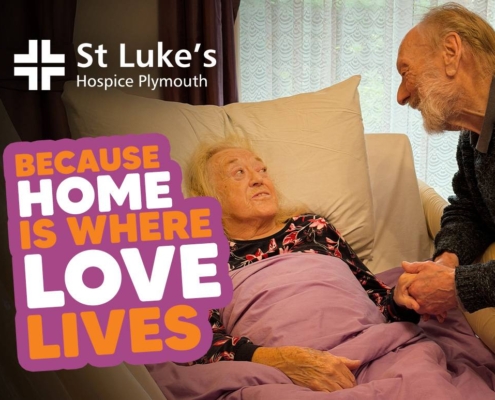 https://www.stlukes-hospice.org.uk/wp-content/uploads/2025/11/Valerie-and-Michael-Blog-Header-November-2025.jpg
773
1030
Gabby Nott
https://www.stlukes-hospice.org.uk/wp-content/uploads/2022/12/st-lukes-hospice-plymouth.svg
Gabby Nott2025-11-23 15:22:452025-11-22 15:49:52BLOG: Because home is where love lives
https://www.stlukes-hospice.org.uk/wp-content/uploads/2025/11/Valerie-and-Michael-Blog-Header-November-2025.jpg
773
1030
Gabby Nott
https://www.stlukes-hospice.org.uk/wp-content/uploads/2022/12/st-lukes-hospice-plymouth.svg
Gabby Nott2025-11-23 15:22:452025-11-22 15:49:52BLOG: Because home is where love lives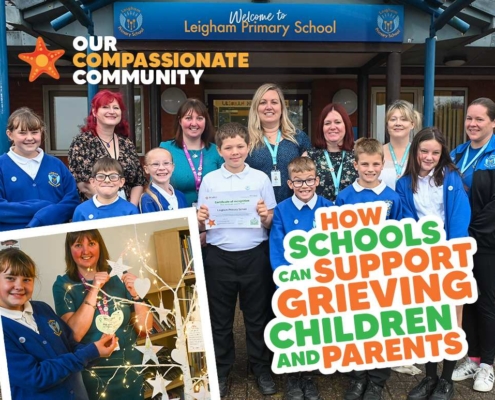 https://www.stlukes-hospice.org.uk/wp-content/uploads/2025/10/Compassionate-Schools-Blog-Header-15-10-25.jpg
773
1030
Gabby Nott
https://www.stlukes-hospice.org.uk/wp-content/uploads/2022/12/st-lukes-hospice-plymouth.svg
Gabby Nott2025-11-09 15:23:082025-11-13 14:43:52BLOG: How schools can support grieving children and parents
https://www.stlukes-hospice.org.uk/wp-content/uploads/2025/10/Compassionate-Schools-Blog-Header-15-10-25.jpg
773
1030
Gabby Nott
https://www.stlukes-hospice.org.uk/wp-content/uploads/2022/12/st-lukes-hospice-plymouth.svg
Gabby Nott2025-11-09 15:23:082025-11-13 14:43:52BLOG: How schools can support grieving children and parents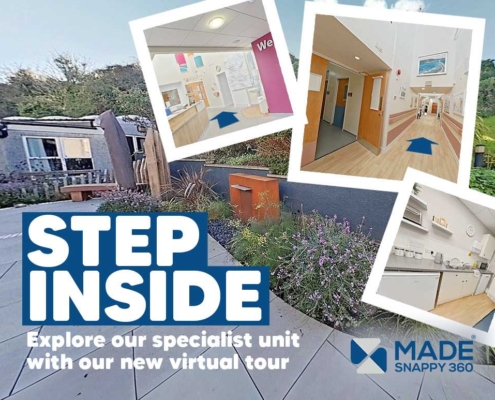 https://www.stlukes-hospice.org.uk/wp-content/uploads/2025/11/Virtual-Tour-Blog-Header.jpg
773
1030
Gabby Nott
https://www.stlukes-hospice.org.uk/wp-content/uploads/2022/12/st-lukes-hospice-plymouth.svg
Gabby Nott2025-11-07 13:38:562025-11-06 14:33:55BLOG: Step inside: Explore our specialist unit with our new hospice virtual tour
https://www.stlukes-hospice.org.uk/wp-content/uploads/2025/11/Virtual-Tour-Blog-Header.jpg
773
1030
Gabby Nott
https://www.stlukes-hospice.org.uk/wp-content/uploads/2022/12/st-lukes-hospice-plymouth.svg
Gabby Nott2025-11-07 13:38:562025-11-06 14:33:55BLOG: Step inside: Explore our specialist unit with our new hospice virtual tour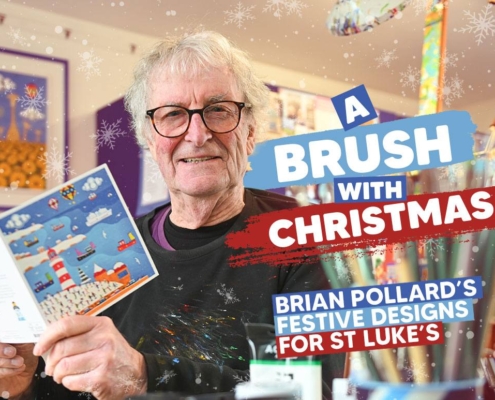 https://www.stlukes-hospice.org.uk/wp-content/uploads/2025/10/Brian-Pollard-Xmas-2025-Blog.jpg
773
1030
Gabby Nott
https://www.stlukes-hospice.org.uk/wp-content/uploads/2022/12/st-lukes-hospice-plymouth.svg
Gabby Nott2025-10-26 14:37:112025-10-23 15:05:45BLOG: A brush with Christmas: Brian Pollard’s festive designs for St Luke’s
https://www.stlukes-hospice.org.uk/wp-content/uploads/2025/10/Brian-Pollard-Xmas-2025-Blog.jpg
773
1030
Gabby Nott
https://www.stlukes-hospice.org.uk/wp-content/uploads/2022/12/st-lukes-hospice-plymouth.svg
Gabby Nott2025-10-26 14:37:112025-10-23 15:05:45BLOG: A brush with Christmas: Brian Pollard’s festive designs for St Luke’s


 BLOG: Run, Rudolph, Run! School children take on festive fun run for hospice...