Skilled listeners who support end of life patients and loved ones beyond clinical care
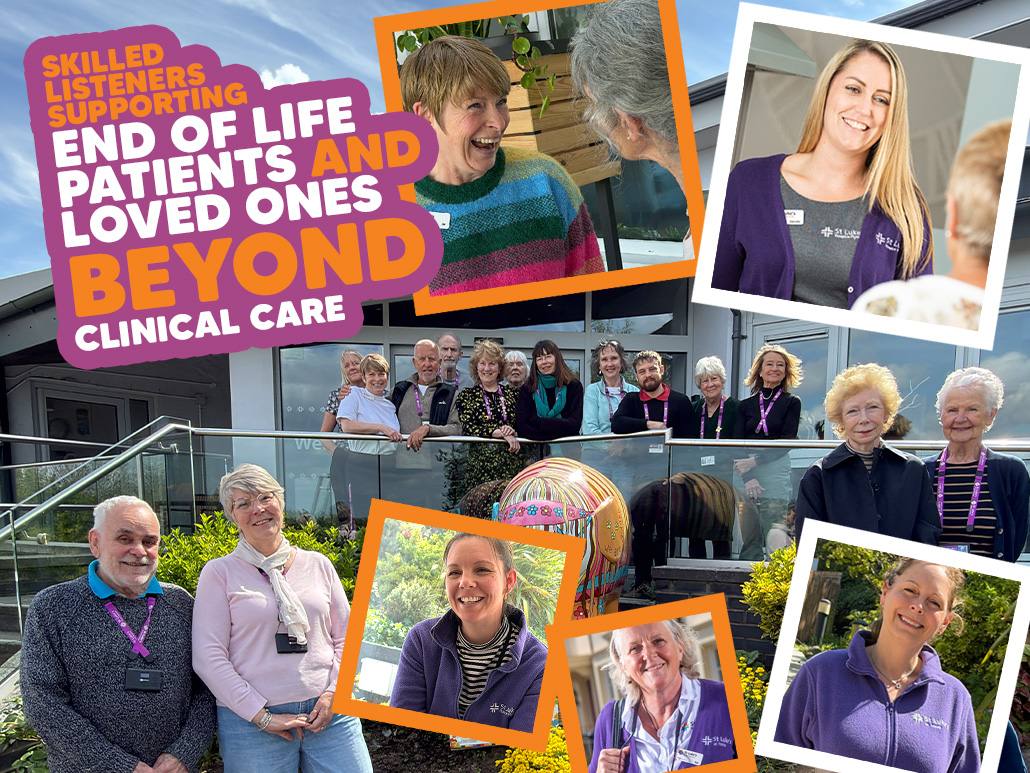
When St Luke’s promises to be there at the toughest of times for people living with a life‑limiting illness and their families, it goes beyond the compassion and expertise of our clinical care. It reflects our belief that no one should face dying alone or in pain, and that everyone deserves gentle, knowledgeable, person‑centred support throughout their journey.
Behind the scenes, our small but highly skilled Patient and Family Support Service team is a constant presence. They support patients and families as they cope with emotional pain, practical challenges and spiritual dilemmas, including those who have no family members or friends able to stand beside them.
While our nurses, healthcare assistants and doctors are the daily frontline ambassadors for St Luke’s heartfelt holistic end of life care, this team work quietly alongside them to help make a “good death” possible, while being a source of reassurance for those left behind
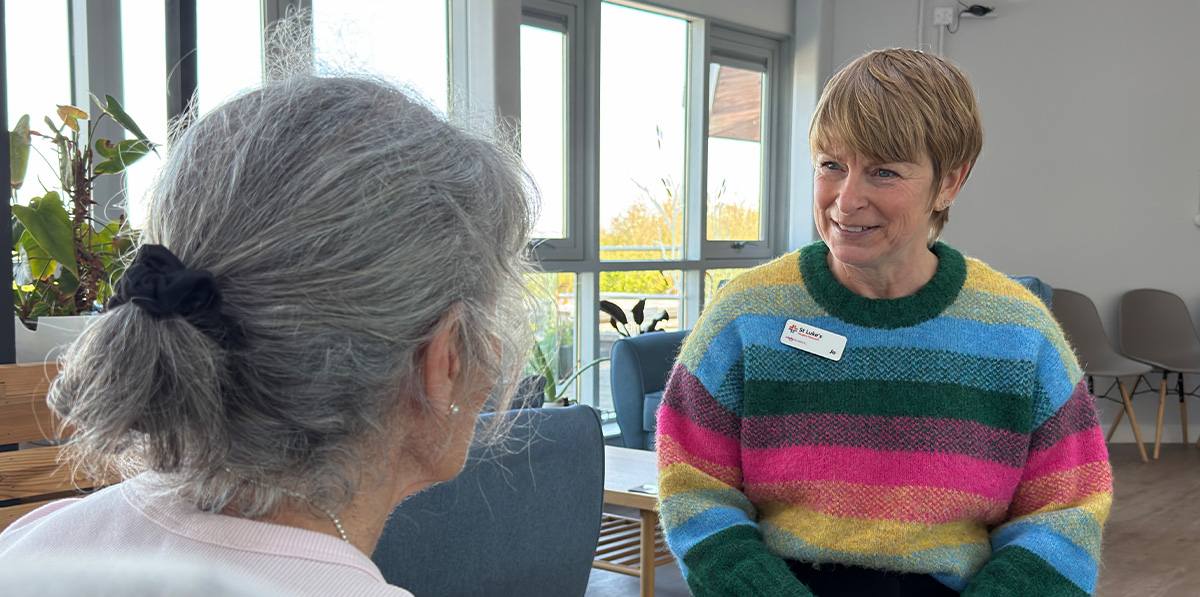
Social worker and team lead Jo Colquhoun
The PAFSS team’s involvement is the element of St Luke’s support that remains a steady presence on a patient’s journey, and continues with the family after someone has died, sometimes for a long period of time, especially when children are involved.
The impact of this support is significant. In a single year, the Patient and Family Support Service received almost 600 referrals, provided 500 bereavement support interactions, and offered specialist Patches support to more than 80 children and young people. Every day, their work helps patients and families feel supported, understood and less alone. In addition, they are also there to support their St Luke’s colleagues.
Social workers Jo Colquhoun – the team’s lead – Emma Hancock, Danielle Brown and Sarah Bedaton, social and bereavement support workers Sue Martin and Lisa Carter, and around 20 specially trained volunteers, are multidisciplinary champions, offering a service anchored in dignity and respect. Their aim is to make sure those in distress are offered the help that’s right for them, at the right time.
Supporting patients and their loved ones, either at home or in the hospice’s specialist unit, they work very closely with the clinical community, urgent care and inpatient teams, with referrals come mostly from Clinical Nurse Specialists, although some people are now seeking help directly via St Luke’s Coordination Hub.
When someone learns they have a limited time to live, it can be overwhelming not only for the person themselves, but for those close to them. The desire to make things just a little bit easier for the patient and their loved ones lies at the heart of what the service does.
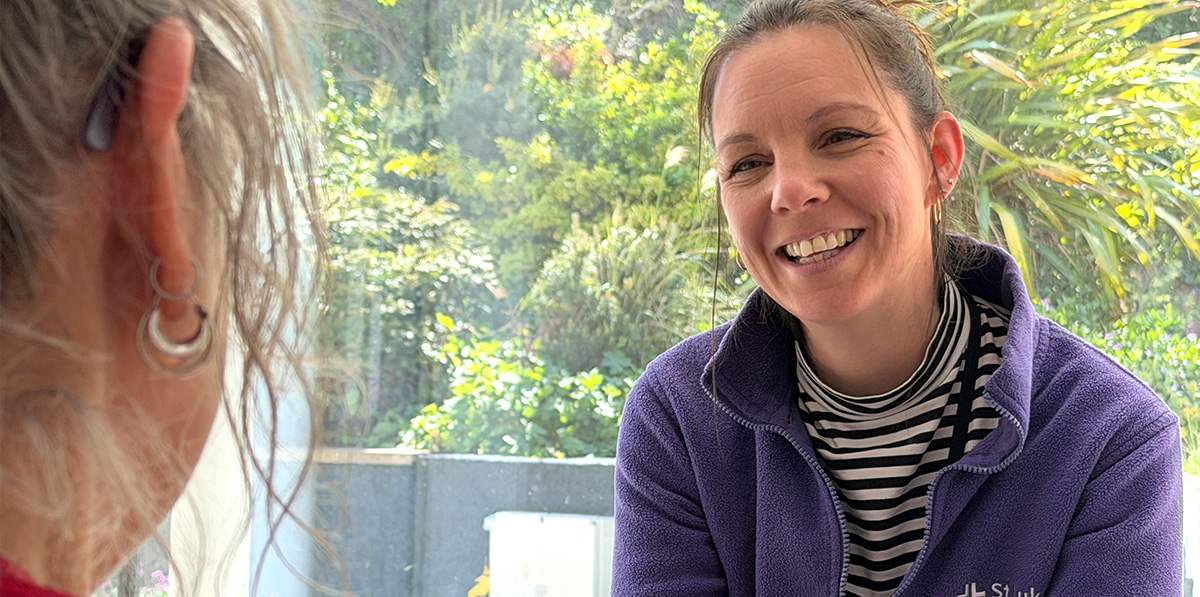
Emma Hancock
“People are not just their illnesses. The illness is something that happens to them. It’s our job to ask and really understand what matters most to that particular person and look at what their goals are, big or small. How, for example, could the day be made slightly better for them?” said Emma.
The team’s social work role is about active listening and considered response, rather than counselling, as Jo is keen to stress.
“We are not counsellors, but our work isn’t simply having a chat over a cup of tea either. It goes much further and deeper than that,” she said. “It’s about building trust. We are very person-centred and meet people where they are at that moment in time. The way we listen is more complex and more skilled than perhaps a friend would do, and we don’t try to ‘fix’ people – that’s not our remit.”
Qualified counselling differs in that it’s a type of therapeutic support that has clearly defined methods and aims and is provided by practitioners who have completed recognised professional training and practise under formal ethical and supervisory frameworks (although it is not regulated by law).
What the PAFSS team does is walk alongside people.
Emma added: “We will be kind, clear and on your side. We are a trusted ear when you don’t want to burden those around you, sometimes with very difficult thoughts or questions. You can speak to us in confidence, and we will respect what you say without judgement.
“We look at someone from the point of view of their entire life, their environment and their close relationships, and make sure they are empowered and know they have choices. We look at what they can do for themselves, physically and emotionally and try to build on their own strengths, while assessing the level of risk involved.
“As social workers in the St Luke’s environment, we get to do our job in an old-school community way. We can give people time, and we can rest at the end of the day knowing we have done our best. It is a genuine privilege.”
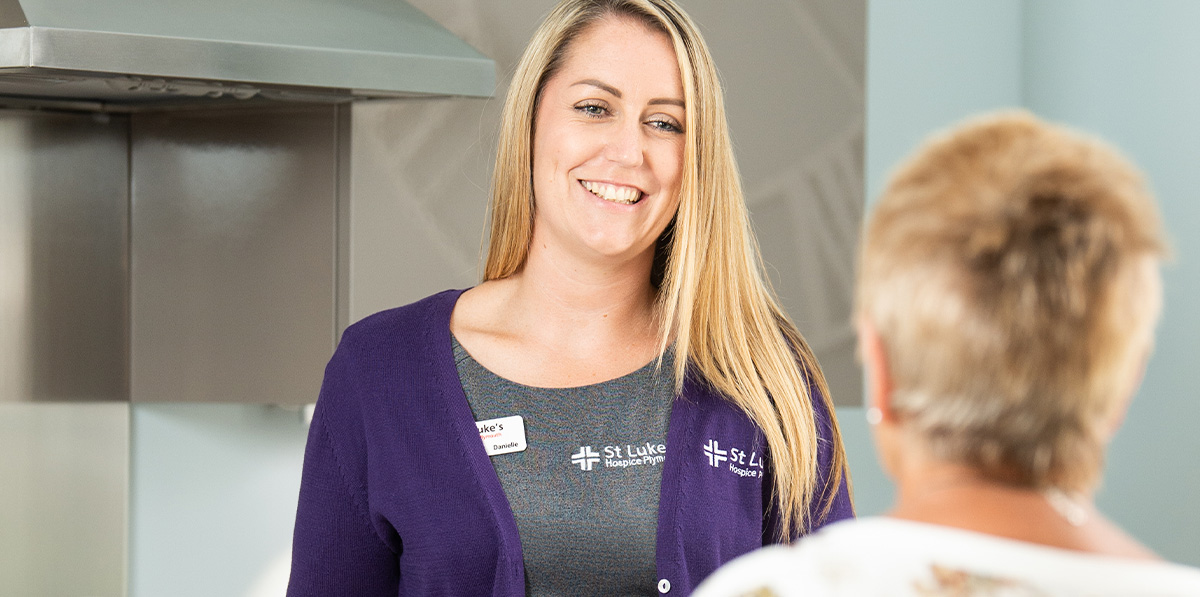
Danielle Brown
With time running short, there’s an urgency to try and address matters that are causing the most anxiety, whether emotional or practical. There are myriad factors that can impact at such a difficult and emotional time, including pressured relationships, physical constraints, mental health problems, past trauma, learning disabilities, transport issues or financial troubles, and the team are there to help people identify and prioritise what they feel is important.
When it’s appropriate, they will connect or signpost people to other agencies such as the Citizens Advice Bureau, or to support available in the community, such as the companionship offered by Compassionate Cafes.
“Even if someone’s troubles initially look straightforward, there can often be a deep layer of issues beneath the surface,” explained Emma. “Someone might have regrets or family problems they want to resolve. Do they want to see a particular person or do a particular activity? They will also be facing up to a changing identity and physical appearance as they get sicker. They might have been a high-flying capable person and suddenly they need to let others look after them and that’s hard to adjust to.”
“We are really empathising, thinking about things other people take for granted. Can we help someone accept a little bit of support that will help them stay in their own home longer? Could we work with the occupational therapist to make things easier for them? Is it appropriate to get support from adult social care?
“For instance, getting themselves washed and dressed might be painful and tire them out so much that they have no energy for the fun things, but if they have a little help with the ordinary things, maybe it can free up that time and energy for something they enjoy doing.”
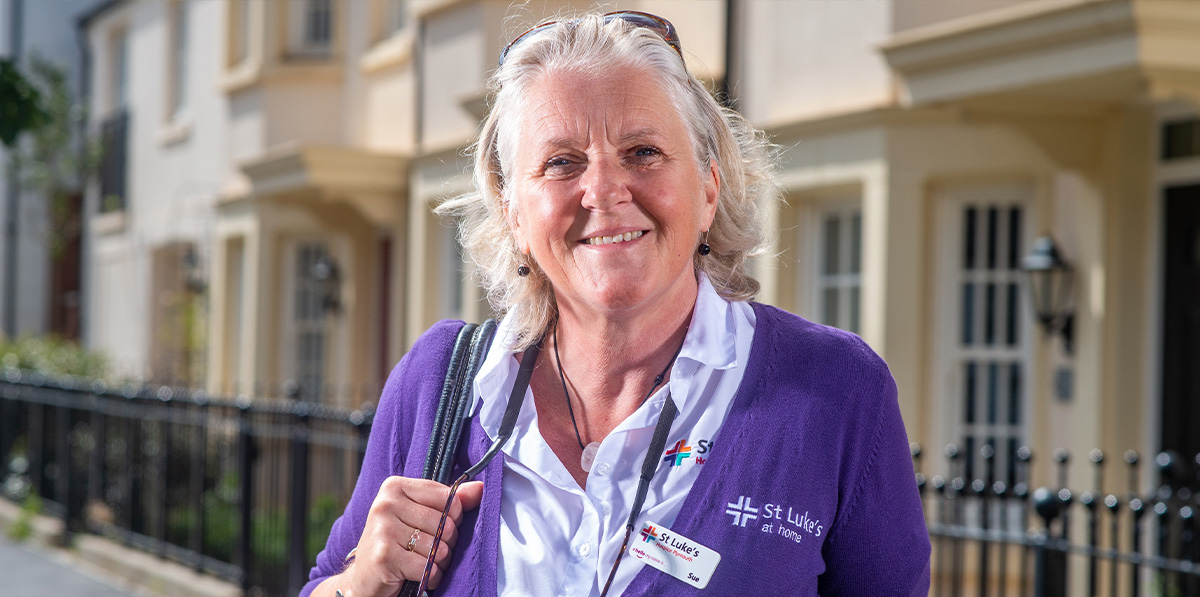
Sue Martin
Looking after carers is another hugely important part of the team’s work, listening to their needs, providing emotional support, helping them with difficult conversations around care and getting support packages from adult social care and the NHS.
The team’s social workers also keep an acute eye on the law and people’s human rights, especially legalities around mental health and mental capacity, elements that often come into play when deciding where someone should be cared for.
In addition to their direct work with patients and families, the team work closely with the clinical team and, when needed, act as a consultancy service for St Luke’s doctors, nurses and healthcare assistants. They are involved in training and increasing awareness around safeguarding for adults and children.
“We also work with social services to support and empower people who may be subject to or at risk of abuse and put them at the centre of decisions about their lives,” said Emma.
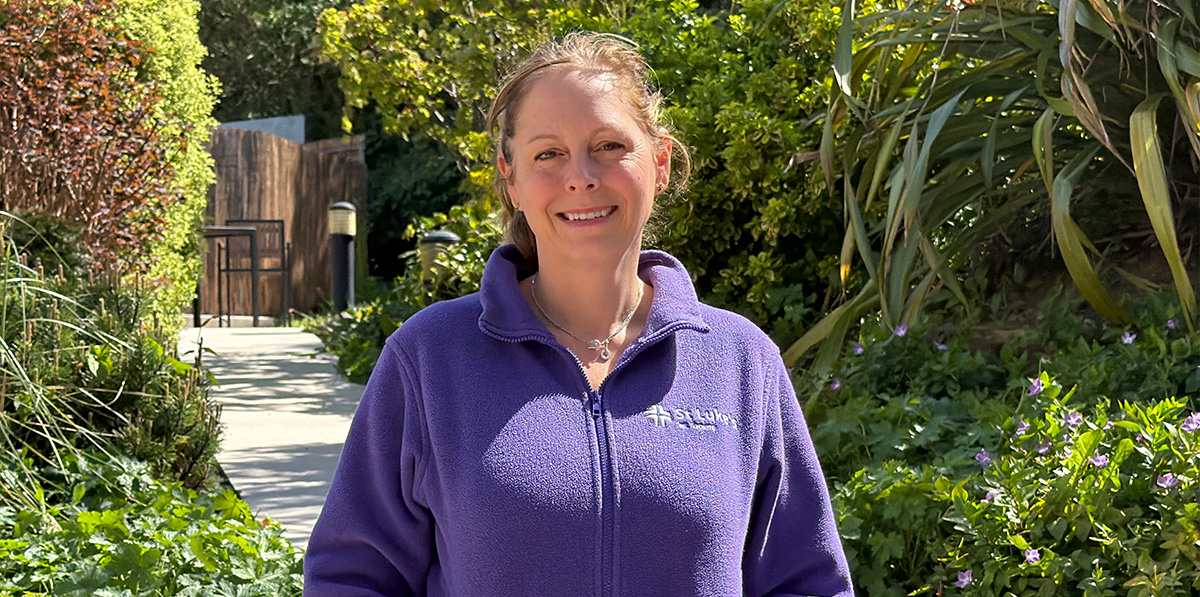
Sarah Bedaton
The death of someone we love is devastating and grief can feel overwhelming. A lot of the service’s work involves helping a patient’s partner and family members navigate their sadness and loss.
“People need bereavement support at different times,” said Jo. “For some it is straight after someone has died. For others it is after the funeral. For some people it’s much later – it’s open ended for us. One person approached us recently two years after her loved one died and that’s OK.”
Individuals are typically offered six or seven sessions with one of the team, who use their skills to identify when more support might be needed, such as ongoing mental health therapy from another specialist source.
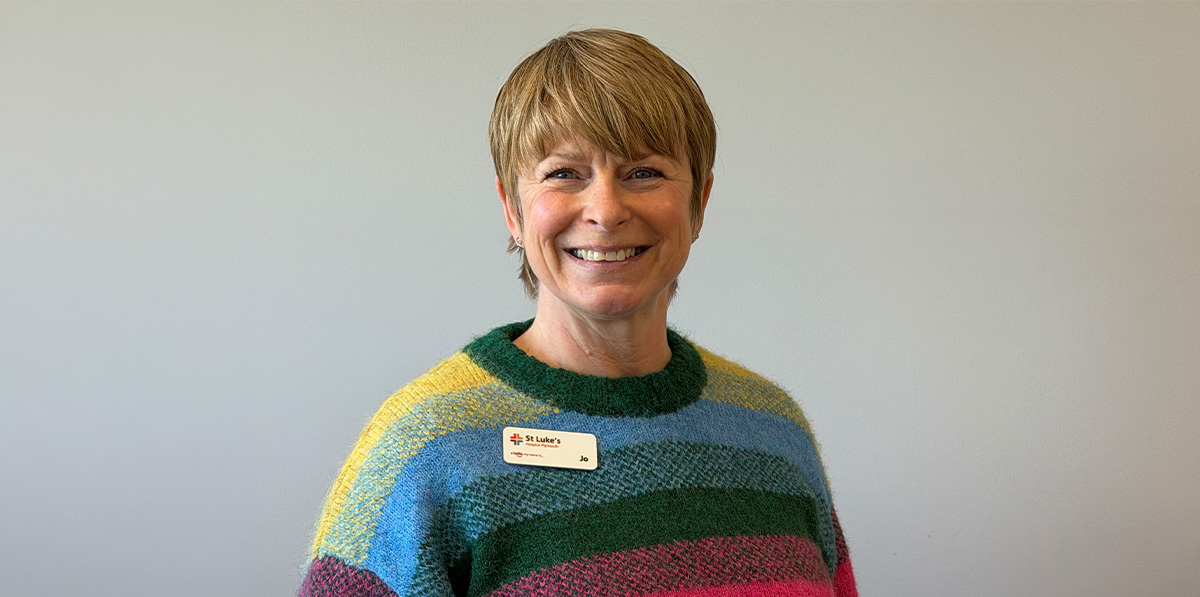
Jo Colquhoun
When there are children or teenagers in the family, the team try to get involved as early as possible, offering support before and after their loved one dies. St Luke’s bespoke Patches initiative for under-18s is all about explaining what’s happening in understandable terms and helping them to make precious memories to hold onto.
Jo said: “We’re privileged to work with the children and families that we do. A lot of that involves helping parents and carers to discuss whether certain behaviours are normal for a child who is grieving.”
If it’s a child’s parent, close relative or friend that St Luke’s is looking after, the team will work with their school or nursery, and sometimes CAMHS NHS mental health services, to make sure there is a solid network around them and plenty of support and advice for whoever will be caring for them.
“We also work with St Luke’s community development worker Judy Horne and the Compassionate Schools programme, which is brilliant. Being able to talk about their emotions and say I’m frightened, unhappy, scared is so good for a child’s wellbeing. Once children have access to emotional literacy around death and dying it’s going to put me out of a job!”
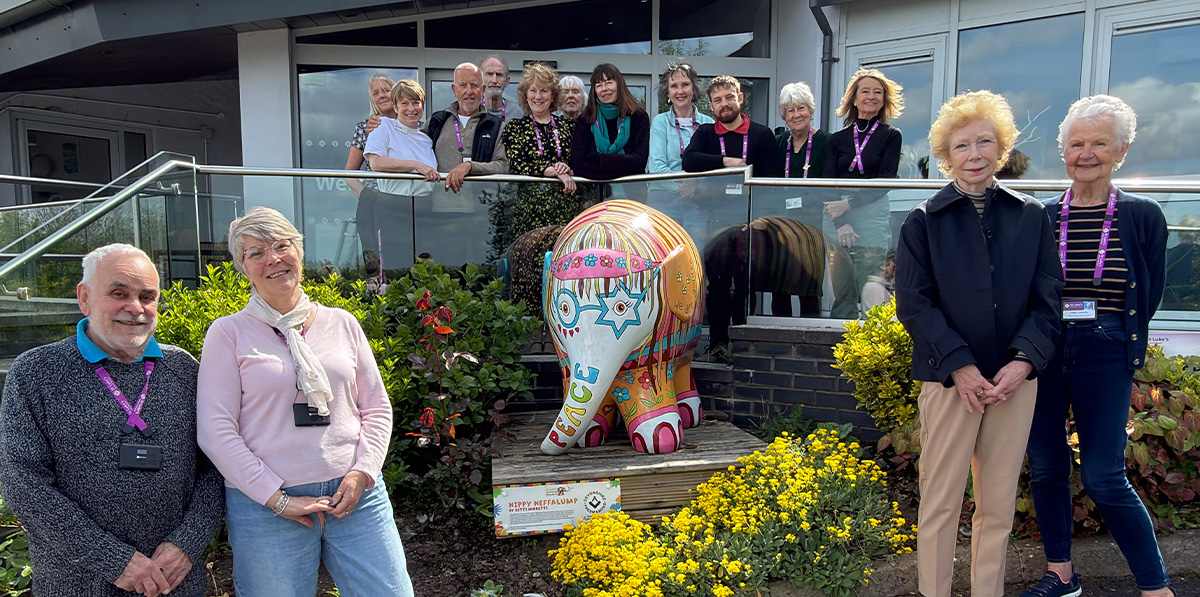
The team of volunteers helping St Luke’s Patient and Family Support Service
The core professional Patient and Family Support Service team is reinforced by 20 regular trained volunteers. Some have been with St Luke’s for more than two decades while others are just beginning their volunteer journeys, together bringing an extraordinary range of life experience, compassion and commitment to the roles of befriending for patients and bereavement support for family members. Some volunteer because St Luke’s cared for their own loved ones.
Jo admitted she wasn’t sure what to expect when she first joined the service two years ago, but her perspective quickly changed.
“We would literally be lost without our volunteers,” said Jo. “They are really skilled listeners and they’re brilliant at spotting when something feels out of the ordinary. We’re able to match each volunteer precisely to the person they’re supporting.”
Their work spans a wide spectrum of emotional and practical support for patients and their families. This might mean offering company at home, accompanying them out for a walk or a coffee, or simply being a friendly, reliable voice on the phone.
Every volunteer receives a thorough induction, and they’re invited to regular team meetings. They are treated as full members of the team, with access to the same supervision, boundaries and safeguarding structures as staff.
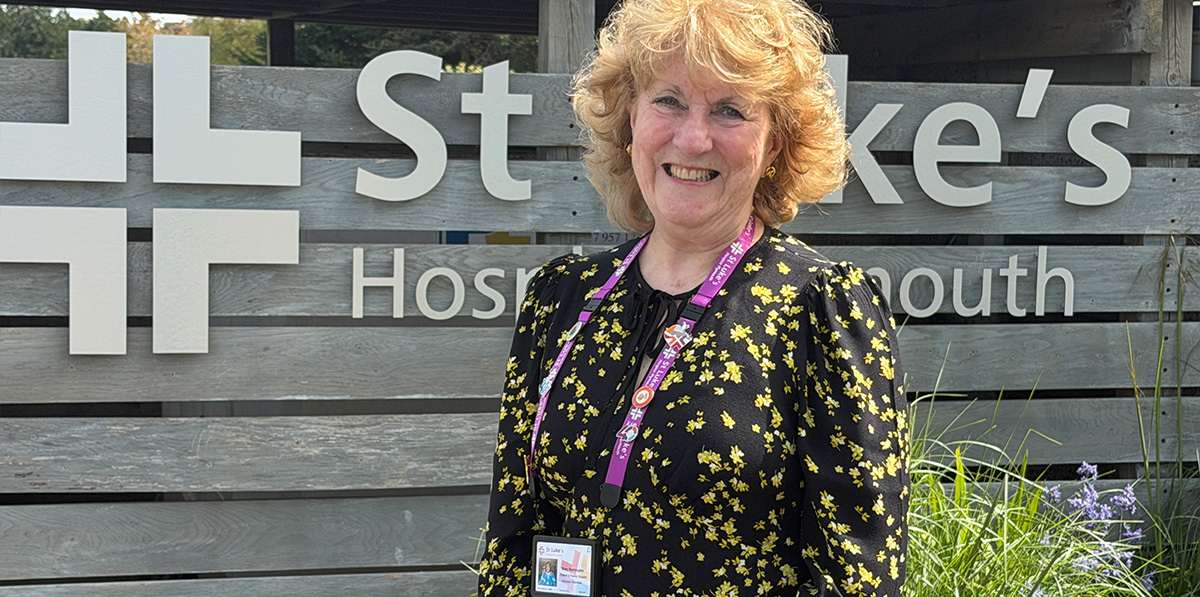
Volunteer Mary Burroughs
Many of the team’s volunteers bring decades of career and life experience to their role – people like Mary Burroughs, who after six years’ service now helps interview new volunteers joining the service.
A PA for her whole working life, in the corporate world and at Derriford Hospital, Mary found herself with time on her hands after she retired and she now volunteers for St Luke’s one morning a week.
“Life has been very good to me, touch wood, and I wanted to do something to give back. I had no experience of family or friends being cared for by St Luke’s, and I didn’t know anyone else who volunteered for the hospice, but one morning I felt I must do something with myself. I like people and I like listening to them and talking to them, so what could I do?” said Mary, who found her inspiration on St Luke’s website.
“I went into it with an open mind. I did the training and if it wasn’t right for me, I would have put my hands up. But I get such a lot out of offering both befriending and bereavement support. It’s lovely to have a worthwhile purpose.
“It is very humbling. People are talking to you at the lowest point in their life. They are very fragile, and you have to adapt to their situation. All the clients I have had have been gorgeous. I absolutely love it. I wish I could have done it sooner.”
Most of the volunteer cohort are retired like Mary, but new faces span different ages and backgrounds. The team also benefits from having a number of male volunteers in befriending and bereavement support roles.
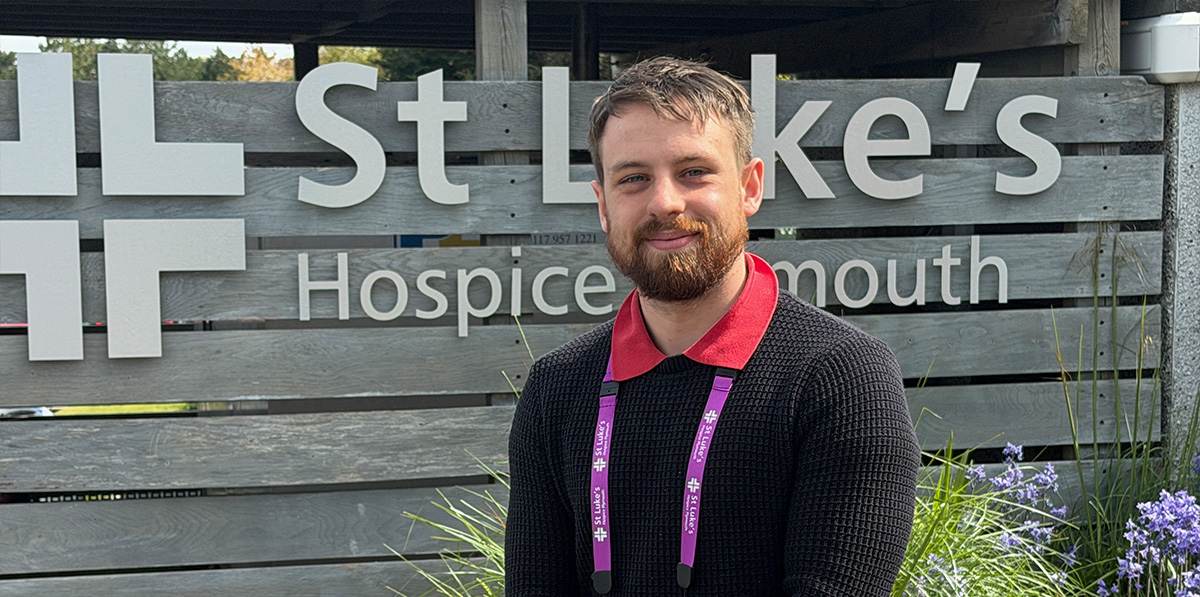
Volunteer Lewis Anane-Howard
At 23 Lewis Anane-Howard is currently the youngest Patient and Family Services volunteer. After an early career as a firefighter and experience as a Samaritans volunteer in Taunton, he developed a keen interest in mental health and chose to study counselling and psychology.
After starting his degree course at Plymouth University, Lewis – a new father whose wife is a medical student based at Derriford Hospital – wanted to give some time to help other people through terminal illness and bereavement, while using and expanding his own skills.
He said: “I knew about hospices because my partner’s mum passed away in a different hospice a few years ago. I applied for a vacancy at St Luke’s and after training I took on my first client in October last year.
“I find it very rewarding and have got on well with the people I support. Being warm and honest and having empathy and integrity are the most important things, as well as an awareness of your own values and scars.
“It’s great to work alongside people with a social work background and other volunteers with lots of experience. There is such a lot of expertise to learn from, and they are always at the end of the phone if I need them.”
For those already under St Luke’s care, patients, carers or family members can ask their Clinical Nurse Specialist or healthcare assistant to refer them to the Patient and Family Support Service. You can also call our Coordination Hub for advice on 01752 964200.
St Luke’s embodies a way of caring shaped by what individuals want and need at any given time, and its Patient and Family Support Service captures that ethos.
Jo said: “We meet people where they are, support them professionally, and walk alongside them when they need it most.”
The work of St Luke’s Patient and Family Support Service is made possible through the kind donations, fundraising efforts and lasting legacies made by people and organisations in our community. Find out more about donating to St Luke’s here.
Speak to your St Luke’s nurse, doctor or healthcare assistant or call our Coordination Hub for advice.
No. The Patient and Family Support Service team are skilled listeners who provide emotional and practical support. Counselling is a qualified profession using specific methods and goals. If you want additional professional mental health support, the team can help to direct you to the right service.
Yes. There is no charge for St Luke’s care. This is made possible by kind donations, fundraising and gifts in wills.
Yes. The team can help you identify what you might be entitled to and connect you with the right services.
The team can help you think through what you want and how to achieve it, although they can’t directly make any arrangements.
Individuals are typically offered six sessions with a member of the team. There’s no fixed time limit on when you can request bereavement support following the death of your loved one.
If you need ongoing mental health therapy or qualified counselling, we can advise you on how to access specialist services.
Yes, through our specialist Patches programme for under-18s.
Yes. All volunteers go through a thorough induction and have access to the same supervision, boundaries and safeguarding structures as our paid staff. We also carefully match each volunteer to the person they’re supporting.
 https://www.stlukes-hospice.org.uk/wp-content/uploads/2026/08/Daves-Story-Blog-Header.jpg
733
1030
Charlie Carlyle
https://www.stlukes-hospice.org.uk/wp-content/uploads/2022/12/st-lukes-hospice-plymouth.svg
Charlie Carlyle2026-09-02 11:32:112026-09-02 11:48:26Dave’s reason to ride: Making every mile matter
https://www.stlukes-hospice.org.uk/wp-content/uploads/2026/08/Daves-Story-Blog-Header.jpg
733
1030
Charlie Carlyle
https://www.stlukes-hospice.org.uk/wp-content/uploads/2022/12/st-lukes-hospice-plymouth.svg
Charlie Carlyle2026-09-02 11:32:112026-09-02 11:48:26Dave’s reason to ride: Making every mile matter https://www.stlukes-hospice.org.uk/wp-content/uploads/2026/08/MP-Visit-Blog-Header.jpg
733
1030
Jesse Cambridge
https://www.stlukes-hospice.org.uk/wp-content/uploads/2022/12/st-lukes-hospice-plymouth.svg
Jesse Cambridge2026-09-02 10:00:312026-09-02 15:41:55Anna Gelderd MP backs fairer end-of-life care
https://www.stlukes-hospice.org.uk/wp-content/uploads/2026/08/MP-Visit-Blog-Header.jpg
733
1030
Jesse Cambridge
https://www.stlukes-hospice.org.uk/wp-content/uploads/2022/12/st-lukes-hospice-plymouth.svg
Jesse Cambridge2026-09-02 10:00:312026-09-02 15:41:55Anna Gelderd MP backs fairer end-of-life care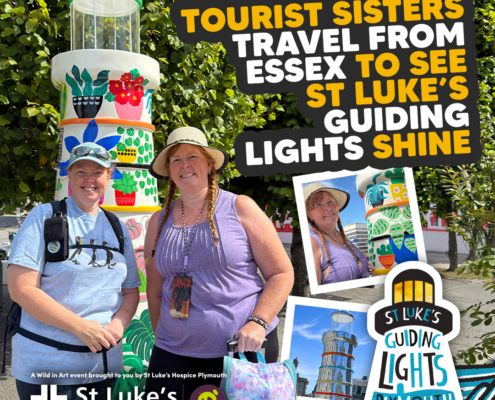 https://www.stlukes-hospice.org.uk/wp-content/uploads/2026/08/Guiding-Lights-Tourist-Article-August-2026-108057.jpg
1080
1080
Charlie Carlyle
https://www.stlukes-hospice.org.uk/wp-content/uploads/2022/12/st-lukes-hospice-plymouth.svg
Charlie Carlyle2026-08-28 09:00:582026-08-26 20:37:30Tourist sisters travel from Essex to see Guiding Lights shine
https://www.stlukes-hospice.org.uk/wp-content/uploads/2026/08/Guiding-Lights-Tourist-Article-August-2026-108057.jpg
1080
1080
Charlie Carlyle
https://www.stlukes-hospice.org.uk/wp-content/uploads/2022/12/st-lukes-hospice-plymouth.svg
Charlie Carlyle2026-08-28 09:00:582026-08-26 20:37:30Tourist sisters travel from Essex to see Guiding Lights shine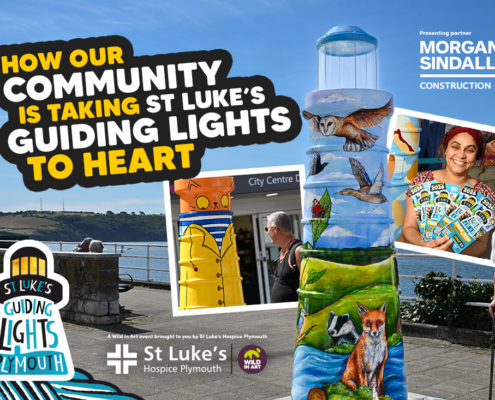 https://www.stlukes-hospice.org.uk/wp-content/uploads/2026/08/GL-One-Month-On-Blog-Header-August-2026.jpg
733
1030
Charlie Carlyle
https://www.stlukes-hospice.org.uk/wp-content/uploads/2022/12/st-lukes-hospice-plymouth.svg
Charlie Carlyle2026-08-24 17:06:302026-09-02 15:37:47How our community is taking St Luke’s Guiding Lights to heart
https://www.stlukes-hospice.org.uk/wp-content/uploads/2026/08/GL-One-Month-On-Blog-Header-August-2026.jpg
733
1030
Charlie Carlyle
https://www.stlukes-hospice.org.uk/wp-content/uploads/2022/12/st-lukes-hospice-plymouth.svg
Charlie Carlyle2026-08-24 17:06:302026-09-02 15:37:47How our community is taking St Luke’s Guiding Lights to heart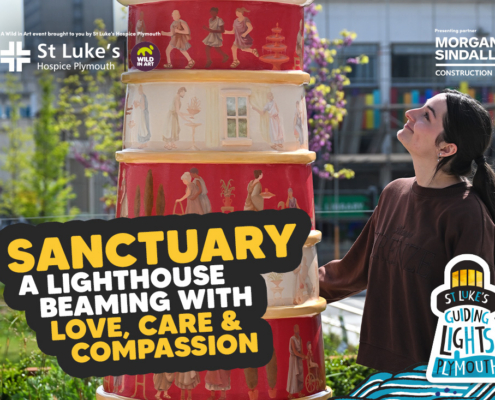 https://www.stlukes-hospice.org.uk/wp-content/uploads/2026/07/Alice-Nimmo-Case-Study-Video-Blog-Header.jpg
733
1030
Gabby Nott
https://www.stlukes-hospice.org.uk/wp-content/uploads/2022/12/st-lukes-hospice-plymouth.svg
Gabby Nott2026-08-02 15:33:422026-07-28 20:57:46Sanctuary: a lighthouse beaming with love, care and compassion
https://www.stlukes-hospice.org.uk/wp-content/uploads/2026/07/Alice-Nimmo-Case-Study-Video-Blog-Header.jpg
733
1030
Gabby Nott
https://www.stlukes-hospice.org.uk/wp-content/uploads/2022/12/st-lukes-hospice-plymouth.svg
Gabby Nott2026-08-02 15:33:422026-07-28 20:57:46Sanctuary: a lighthouse beaming with love, care and compassion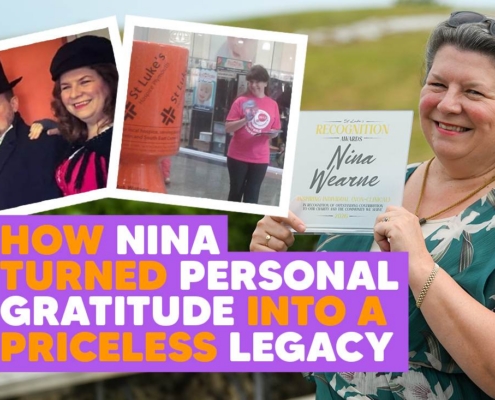 https://www.stlukes-hospice.org.uk/wp-content/uploads/2026/07/Nina-Blog-20-7-26.jpg
733
1030
Gabby Nott
https://www.stlukes-hospice.org.uk/wp-content/uploads/2022/12/st-lukes-hospice-plymouth.svg
Gabby Nott2026-07-26 15:01:302026-09-02 15:46:06How Nina turned personal gratitude into a lasting legacy
https://www.stlukes-hospice.org.uk/wp-content/uploads/2026/07/Nina-Blog-20-7-26.jpg
733
1030
Gabby Nott
https://www.stlukes-hospice.org.uk/wp-content/uploads/2022/12/st-lukes-hospice-plymouth.svg
Gabby Nott2026-07-26 15:01:302026-09-02 15:46:06How Nina turned personal gratitude into a lasting legacy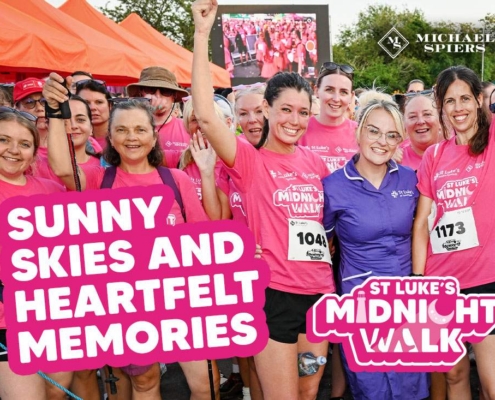 https://www.stlukes-hospice.org.uk/wp-content/uploads/2026/07/MNW26-Post-Event-Blog-Header.jpg
733
1030
Gabby Nott
https://www.stlukes-hospice.org.uk/wp-content/uploads/2022/12/st-lukes-hospice-plymouth.svg
Gabby Nott2026-07-12 19:41:572026-09-02 15:52:33Sunny skies and heartfelt memories as 1,300 join St Luke’s Midnight Walk
https://www.stlukes-hospice.org.uk/wp-content/uploads/2026/07/MNW26-Post-Event-Blog-Header.jpg
733
1030
Gabby Nott
https://www.stlukes-hospice.org.uk/wp-content/uploads/2022/12/st-lukes-hospice-plymouth.svg
Gabby Nott2026-07-12 19:41:572026-09-02 15:52:33Sunny skies and heartfelt memories as 1,300 join St Luke’s Midnight Walk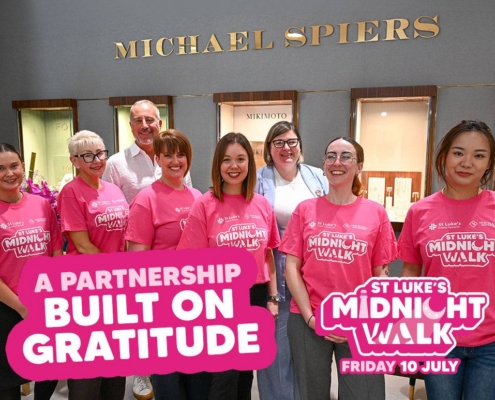 https://www.stlukes-hospice.org.uk/wp-content/uploads/2026/07/MNW-Michael-Spiers-Blog-Header.jpg
773
1030
Gabby Nott
https://www.stlukes-hospice.org.uk/wp-content/uploads/2022/12/st-lukes-hospice-plymouth.svg
Gabby Nott2026-07-08 13:40:202026-07-07 14:46:03A partnership built on gratitude: Why Michael Spiers supports St Luke’s Midnight Walk
https://www.stlukes-hospice.org.uk/wp-content/uploads/2026/07/MNW-Michael-Spiers-Blog-Header.jpg
773
1030
Gabby Nott
https://www.stlukes-hospice.org.uk/wp-content/uploads/2022/12/st-lukes-hospice-plymouth.svg
Gabby Nott2026-07-08 13:40:202026-07-07 14:46:03A partnership built on gratitude: Why Michael Spiers supports St Luke’s Midnight Walk https://www.stlukes-hospice.org.uk/wp-content/uploads/2026/07/GL-Generic-Launch-Blog-Header.jpg
773
1030
Gabby Nott
https://www.stlukes-hospice.org.uk/wp-content/uploads/2022/12/st-lukes-hospice-plymouth.svg
Gabby Nott2026-07-06 07:46:292026-07-05 21:47:11St Luke’s Guiding Lights: Plymouth’s spectacular lighthouse trail set to shine this summer
https://www.stlukes-hospice.org.uk/wp-content/uploads/2026/07/GL-Generic-Launch-Blog-Header.jpg
773
1030
Gabby Nott
https://www.stlukes-hospice.org.uk/wp-content/uploads/2022/12/st-lukes-hospice-plymouth.svg
Gabby Nott2026-07-06 07:46:292026-07-05 21:47:11St Luke’s Guiding Lights: Plymouth’s spectacular lighthouse trail set to shine this summer


 Meet the Guiding Lights Artists: Part 2